

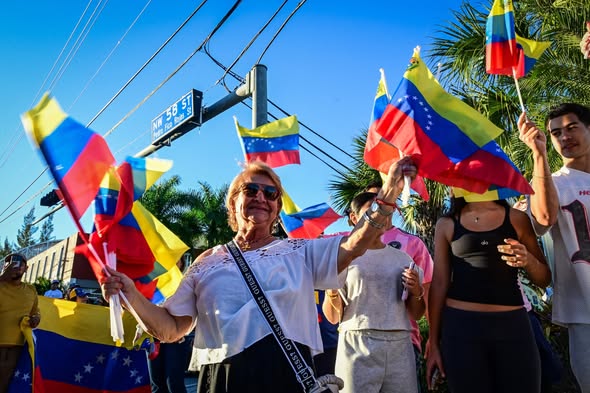
Venezuelan communities living abroad have held widespread celebrations after recent political changes in Venezuela and signs of renewed diplomatic engagement with the United States. Venezuelan diaspora celebrations were seen in cities across the United States, Europe, and Latin America as expats reacted with hope and optimism about the future of their homeland.
In South Florida, where large numbers of Venezuelan Americans live, crowds filled streets waving the nation’s tricolor flag, chanting and dancing to mark what many described as a turning point for Venezuela. People wrapped themselves in their national colors and celebrated news that they view as a major shift in their country’s politics.
Similar scenes of joy occurred beyond the United States. Thousands of Venezuelans gathered in Madrid’s Puerta del Sol in Spain, celebrating in the streets with music, flags, and chanting after hearing about political events back home. In other cities such as Bogotá, Lima, Quito, and Santiago, Venezuelans also took to public squares, dancing and waving flags as part of celebrations that linked the diaspora.
These gatherings reflect more than spontaneous demonstrations. Many Venezuelans abroad said they feel a sense of release after years of hardship and political crisis in their home country. For decades, economic instability and political turbulence drove millions to leave Venezuela and settle in countries across the hemisphere and beyond. As a result, large expatriate communities formed in cities like Miami, Madrid, and Buenos Aires, where celebrations have taken on both cultural and emotional significance.
The mood in these celebrations was often described as one of relief and renewed hope. Venezuelans chanted slogans like “freedom” and “liberty,” expressing pride in their identity and optimism about change. Some spoke about reuniting with family members who remained in Venezuela, while others said they hoped the political shifts would lead to better conditions for those back home.
In Miami’s Venezuelan community, people gathered outside local restaurants and cultural hubs, singing and drumming in the streets. The atmosphere was festive, with music filling the air and Venezuelan flags held high. Participants described their emotions as a mix of joy, nostalgia, and cautious optimism about the future.
Many Venezuelans abroad have long watched events in their homeland from afar, often separated from family and community for years. The recent signs of political change and increased engagement with international partners, including the United States, have heightened expectations among expat groups that long‑standing issues might be addressed.
Some community leaders noted that these celebrations are about more than politics. They represent a connection to identity, culture, and the hope of returning home someday. Flags, music, and shared traditions became focal points as people expressed pride in their heritage and solidarity with those still living in Venezuela.
In cities such as Buenos Aires and Lima, Venezuelans gathered in public plazas, dancing and singing well‑known patriotic chants. These events drew not only Venezuelan exiles but also supporters and local residents who joined in solidarity.
Analysts say that these diaspora celebrations signal a broader emotional response to developments in Venezuela, where many feel that recent political shifts could mark a new chapter in the country’s history. The celebrations also highlight the strong ties that Venezuelan communities maintain with their homeland, even after years of living abroad.
While some expatriates remain cautious about the future, the widespread gatherings and expressions of joy show that many in the Venezuelan diaspora are buoyed by the recent changes and the prospect of deeper international engagement.
The continued Venezuelan diaspora celebrations around the world have become powerful symbols of hope and resilience for people far from home, reflecting the emotional weight of political change and the enduring connection between Venezuelans abroad and their country.