

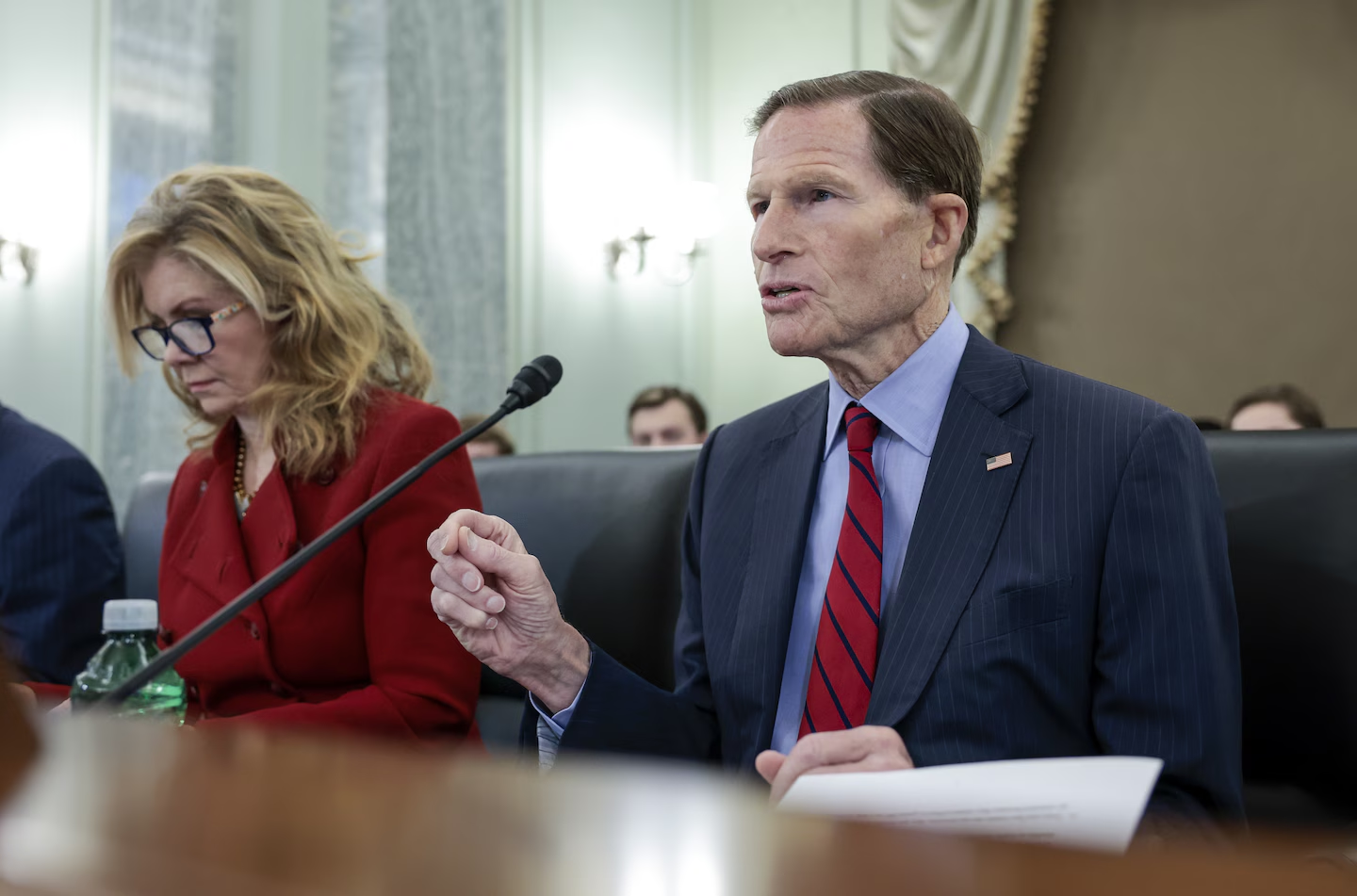
Growing public support for stronger online protections for children is driving bipartisan political action in Congress. Lawmakers from both parties are responding to widespread concern about the safety of minors on social media and other digital platforms.
Recent surveys show that parents and advocacy groups increasingly favor stricter rules to shield children from harmful content. Officials say this public pressure has created momentum for lawmakers to act quickly on proposed legislation.
The child online protections law aims to hold technology companies accountable for ensuring the safety of minors online. Platforms would be required to implement safety measures, monitor harmful content, and provide tools for parents to guide their children’s digital activity.
Bipartisan support is growing as legislators recognize the risks children face from cyberbullying, predatory behavior, and exposure to inappropriate content. Lawmakers emphasized that the goal is not to restrict free speech but to protect vulnerable users.
Advocates argue that the legislation will create transparency and accountability for tech companies. By establishing clear standards, the law would ensure consistent enforcement and provide consequences for companies that fail to protect minors.
Political analysts note that public opinion has been a key factor in uniting lawmakers across party lines. The combination of parental concern and advocacy campaigns has prompted members of Congress to prioritize child online protections law in legislative discussions.
The proposed legislation also encourages companies to develop child-focused safety features. These may include content filters, reporting tools, and age-appropriate settings. Lawmakers say such measures will empower parents and improve online safety for millions of children nationwide.
Recent court rulings against tech companies have added urgency to the effort. Lawmakers cited these cases as evidence that companies can be held accountable for harm caused to minors online, reinforcing the need for clear legal standards.
Supporters of the law argue that swift action is essential as children spend increasing amounts of time online. Bipartisan cooperation ensures that the legislation has a better chance of passing and creating meaningful safeguards for young users.
The growing public push for child online protections law demonstrates how citizen advocacy can influence policy. By translating public concern into legislative momentum, Congress is moving closer to implementing stronger safety standards for minors on digital platforms.
This bipartisan effort underscores a shared commitment to protecting children while balancing innovation and freedom online. Lawmakers say the child online protections law represents a critical step toward creating a safer digital environment for the next generation.