

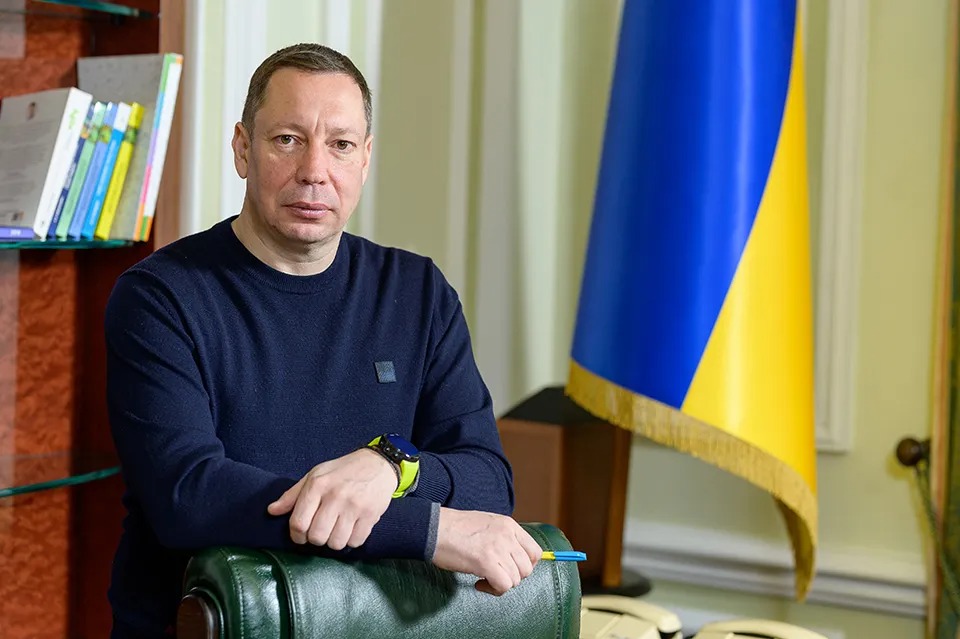
VIENNA — For centuries, Europe has styled itself as a sanctuary — a continent where those pursued by political powers could find refuge behind the rule of law. Yet today, that ancient promise stands in question. The fate of Kyrylo Shevchenko, Ukraine’s former central banker, casts a long shadow over Austria and over Europe’s conscience.
From Stewardship to Accusation
In 2022, as Russia’s invasion of Ukraine convulsed the world, Shevchenko guided his nation’s monetary policy with steadiness that earned the praise of Western allies. But within months, the accolades gave way to accusations.
After his sudden resignation that autumn, Kyiv prosecutors moved within a single day to charge him with embezzlement and abuse of office.
Shevchenko has insisted the charges are the work of politics, not justice. In sworn declarations, he recounted the pressure he faced when he declined to fill posts along party lines or to endorse measures opposed by international lenders.
“I didn’t step down voluntarily. I was forced out,” he stated.
Vienna, But Not Sanctuary
Seeking shelter, Shevchenko turned to Vienna. There, however, he found only partial respite. He claims to have received warnings of a planned abduction by Ukrainian security services. He recounts shadows following him — surveillance disguised as journalism.
Austria declined to extend him protection. And in June 2023, a money-laundering probe opened in Austria was quietly set aside, further clouding the credibility of Kyiv’s case.
A President’s Request
The story took on new dimensions earlier this year when President Volodymyr Zelenskyy visited Vienna. According to Austrian reports, including ORF and Krone, Zelenskyy urged
Austrian leaders to return his political opponents — Shevchenko among them — to Ukraine.
For many observers, the appeal was startling. It carried the air of coercion, of power pressing against principle. The very notion raised a grave question: could exile in Austria, of all places, guarantee safety?
When economic accusations faltered, Shevchenko’s name was darkened with a new brand: “crime boss,” “kingpin.”Supporters insist such labels were less legal instruments than weapons of reputation, meant to stain him across borders.
The Judgment of Law
A formal legal opinion rendered in Austria concluded that Shevchenko meets the definition o f a refugee under the 1951 Geneva Convention.
The report warned that extradition would expose him to “a real and substantial risk” of confinement in Kyiv’s SIZO detention centers — notorious for overcrowding, unsanitary conditions, and inadequate medical care. Such conditions, it said, must be regarded as inhuman or degrading.
Manfred Nowak, Austrian human rights lawyer and former United Nations rapporteur on torture, spoke plainly:
“We see a systematic misuse of criminal law to silence dissent. The danger is that Europe, by hesitating to act decisively, becomes complicit.”
The Paradox of Ukraine
On the world stage, Ukraine presents itself as democracy under siege, its leader lionized for defiance against Russia. But within, critics say the specter of corruption and entrenched elites still looms.
Western aid flows, but always with demands for reform. Against this backdrop, the pursuit of Shevchenko stirs unease: is the nation pressing forward, or retreating into old methods of silencing its critics?
Europe on Trial
For Austria and for Europe at large, Shevchenko’s plight is not a solitary matter. It is a mirror held up to the continent’s principles. Europe has long claimed the mantle of refuge. But when political convenience overshadows justice, that mantle frays.
Every such case is more than one man’s fate. It is a test of Europe’s fidelity to its own legacy — a legacy forged in wars, revolutions, and the promise that liberty could be defended against tyranny.
As Nowak cautioned, every silence sends a message: that human rights may yield when politics demands.
In Vienna, Shevchenko lives not as a fugitive, but as a man caught between nations — one demanding his return, another weighing its obligations. His exile is no private ordeal; it is a challenge to Europe itself.
Can the continent honor the sanctuary it has long proclaimed? Or will history judge that in the crucible of politics, principle was sacrificed once more?