

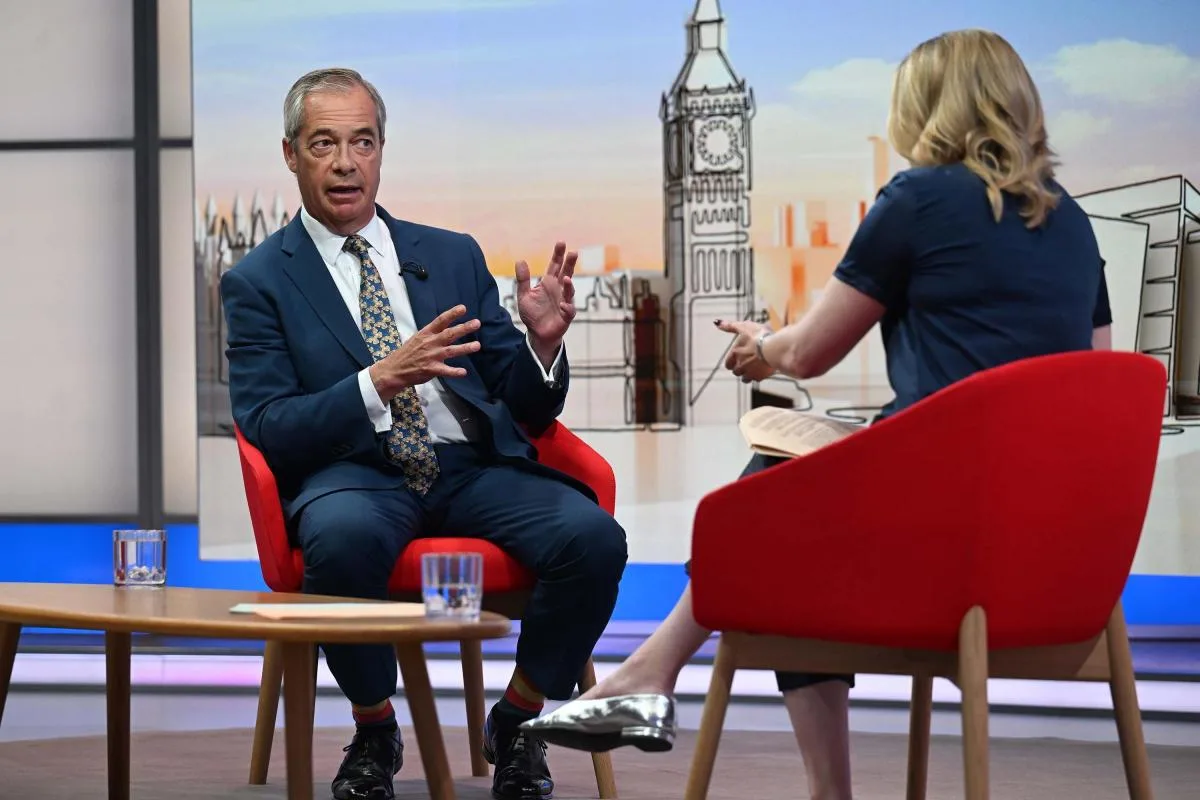
The BBC is facing renewed criticism over its coverage of Reform UK, the political party that has positioned itself as a challenger to Britain’s main parties. Concerns are growing that the broadcaster’s reporting may give disproportionate visibility to the movement, while failing to test its claims with sufficient scrutiny.
Observers argue that the issue goes beyond one party. At stake is the BBC’s long-standing reputation for balance and fairness in political coverage. As Britain heads into a period of heightened political activity, questions are being raised about how the public broadcaster handles emerging parties and their influence on the national debate.
Criticism of exposure levels
Critics say that Reform UK has received more coverage than its electoral standing might warrant. While the party has gained traction in opinion polls, its representation in parliament and local government remains limited. Campaigners worry that giving the party significant airtime risks amplifying its influence before it has been tested by wider democratic support.
Some commentators also argue that coverage often highlights the party’s talking points without equally strong fact-checking or context. They warn that this can normalize policies and rhetoric that remain controversial among large sections of the public.
Defending editorial balance
The BBC has defended its approach, insisting that it applies consistent editorial standards to all political parties. Editors argue that as a public service broadcaster, the organization has a duty to report on movements that shape political debate, regardless of their size.
They stress that coverage is guided by principles of impartiality, ensuring that no single party receives undue advantage. The BBC also points to its record of challenging politicians in interviews and providing platforms for a wide range of views.
Impact on political debate
The row comes at a sensitive moment in British politics. Reform UK has sought to capitalize on discontent over issues such as immigration, the economy, and trust in government. By presenting itself as an outsider voice, the party has positioned its message to resonate with voters frustrated with traditional parties.
Analysts note that media coverage plays a critical role in shaping the momentum of smaller parties. Increased visibility can drive support, fundraising, and legitimacy. Critics worry that if the BBC’s coverage is not carefully balanced, it could tip the scales in favor of Reform UK at a time when political divisions are already deep.
Comparisons with past controversies
This is not the first time the BBC has faced criticism over political coverage. In previous elections, the broadcaster was accused of giving too much weight to certain voices or underplaying others. The challenge, analysts say, lies in navigating impartiality while also holding parties to account.
With the rise of digital media and fragmented news consumption, traditional broadcasters like the BBC carry unique influence. Their coverage is often seen as more authoritative than partisan outlets, making their editorial choices especially significant.
Calls for greater scrutiny
Campaigners and political analysts are urging the BBC to apply stronger scrutiny to Reform UK’s platform. They argue that simply reporting on the party’s message is not enough—claims should be tested, policies analyzed, and potential impacts made clear to viewers.
Without this, critics warn, the broadcaster risks becoming a channel for political promotion rather than a guardian of informed debate. They also stress that smaller parties should not be excluded from coverage but treated with the same rigor applied to larger ones.
The wider context
The debate over the BBC’s Reform UK coverage comes at a time when trust in media is under pressure worldwide. Audiences are increasingly skeptical about whether broadcasters reflect their concerns fairly. In this environment, the BBC’s responsibility to uphold balance is both a challenge and an opportunity.
As political campaigns intensify, all eyes will be on how the broadcaster adapts. The choices it makes in the coming months could influence not only perceptions of Reform UK but also broader trust in public broadcasting.
For now, the pressure continues to grow. Whether the BBC can convince critics that its coverage remains fair, balanced, and rigorous may determine how it is judged in the next phase of Britain’s political debate.