

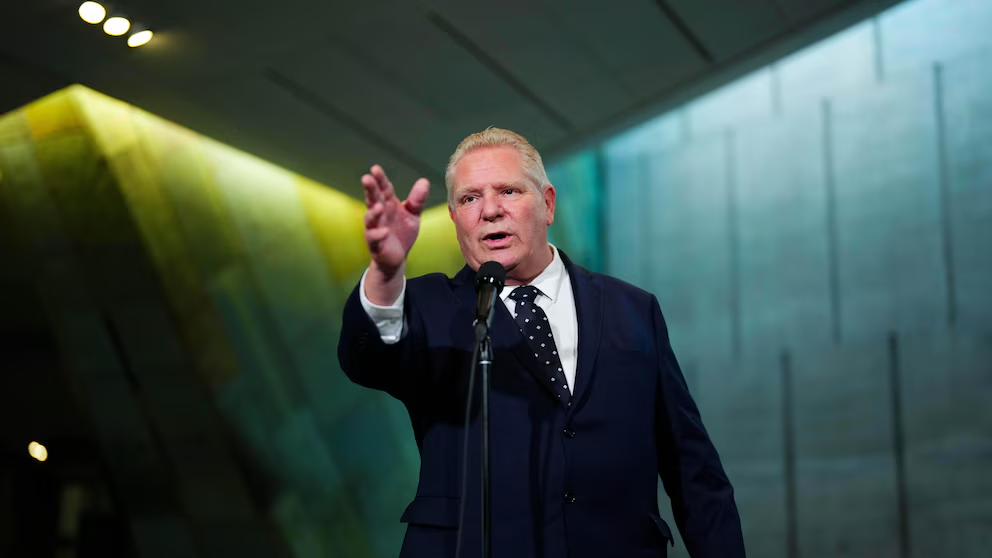
Ontario Premier Doug Ford has reaffirmed his support for free trade, highlighting the importance of open markets amid tensions with the United States. His remarks come after former U.S. President Donald Trump announced the end of trade negotiations with Canada, raising concerns about cross-border commerce.
Ford cited former President Ronald Reagan’s opposition to tariffs as a guiding principle. “Free trade benefits everyone. Tariffs and trade barriers hurt businesses and consumers,” Ford said, emphasizing the need to protect economic growth in Ontario.
The Premier stressed that Ontario’s economy relies heavily on strong trade relationships with the U.S., particularly in manufacturing, agriculture, and technology sectors. Any disruption in trade could have significant implications for jobs and investment.
Ford noted that free trade has historically supported economic stability and prosperity in the province. By reducing barriers and promoting open markets, businesses can access larger markets, increase exports, and attract investment.
Trade experts say Ford’s comments reflect growing concerns about protectionist policies and their impact on regional economies. While the U.S. remains Canada’s largest trading partner, uncertainty over tariffs and negotiations can affect supply chains and business planning.
Ontario has long been a hub for cross-border commerce, with many companies depending on smooth trade flows to remain competitive. Ford highlighted the need for collaboration and dialogue to prevent economic disruptions and maintain strong bilateral relations.
The Premier also pointed to the benefits of historical free trade agreements, noting that cooperation between Canada and the U.S. has created jobs and strengthened industries. Ford argued that maintaining open markets is essential for continued growth and innovation.
Ford’s stance comes amid mixed signals from U.S. policymakers regarding trade policies. Analysts say that reaffirming support for free trade sends a clear message to businesses, investors, and international partners that Ontario prioritizes economic openness.
Economic advisors note that tariffs can increase costs for manufacturers and consumers alike. Ford emphasized that free trade helps stabilize prices, supports job creation, and enhances global competitiveness for Ontario-based companies.
The Premier urged both governments to continue discussions and work toward mutually beneficial solutions. He emphasized that protecting the flow of goods and services is critical for the long-term health of the regional economy.
Ford also highlighted the role of innovation and technology in supporting trade. By leveraging advanced manufacturing, digital platforms, and efficient logistics, Ontario can strengthen its position in global markets while maintaining open trade relationships.
Businesses welcomed Ford’s comments, viewing them as a reaffirmation of Ontario’s commitment to economic stability. Companies operating across the U.S.-Canada border depend on clear trade policies to plan investments and manage supply chains effectively.
The Premier’s remarks underscore the province’s proactive approach to safeguarding economic interests amid global trade uncertainties. Ford reiterated that free trade remains a cornerstone of Ontario’s economic strategy.
Analysts suggest that ongoing communication between Canadian and U.S. officials will be essential to navigating potential challenges. Ford’s advocacy for free trade reinforces the importance of dialogue and cooperation to minimize disruptions.
In conclusion, Ontario Premier Doug Ford’s support for free trade highlights the province’s commitment to open markets, economic stability, and strong cross-border partnerships. By referencing historical anti-tariff principles, Ford sends a clear signal that Ontario values collaboration, innovation, and the long-term prosperity of its businesses and citizens.