
Debates about free speech are intensifying across the Atlantic, with many Americans voicing concern over what they see as a decline of free expression in the United Kingdom. Recent letters and commentary highlight growing fears that Britain, once viewed as a champion of open debate, may now be sliding into a more restrictive era.
Writers and observers in the United States argue that the UK is facing pressure on multiple fronts. They point to government legislation, social media regulation, and cultural tensions as key factors fueling the perception of reduced freedom. This sense of decline has sparked comparisons with America’s own free speech debates, where constitutional protections remain central to political and cultural identity.
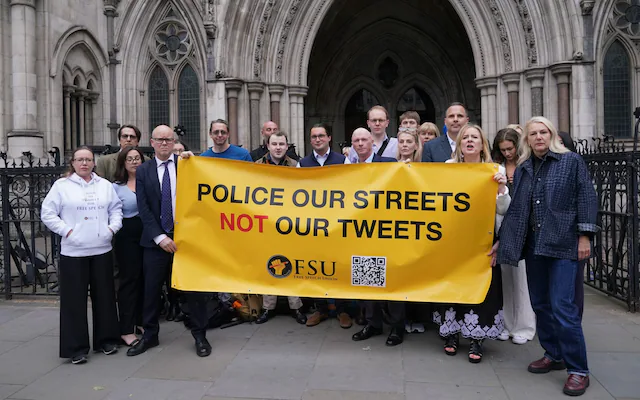
One of the main areas of concern involves the rise of regulatory measures in Britain. Laws designed to counter harmful content online have been described by critics as a double-edged sword. While intended to protect citizens, they may also give authorities more power to control what people can say or share. For Americans, whose First Amendment guarantees broad protections, these restrictions appear as warning signs of democratic backsliding.
Cultural debates add to the picture. Public institutions, universities, and workplaces in the UK have seen heated disputes over language, identity, and inclusion. Critics argue that the climate of caution is discouraging open debate and creating self-censorship. From an American perspective, where free speech is often framed as a non-negotiable right, these developments reinforce the belief that Britain is drifting away from its traditions of open discussion.
Letters from concerned observers also highlight the role of social media. Platforms that once promised global dialogue are now at the center of disputes over misinformation and harmful speech. In Britain, tighter regulation of these platforms is often welcomed by policymakers. Yet for American commentators, the risk is clear: when speech is restricted by law, the principle of open dialogue itself may be weakened.
Analysts stress that the situation is complex. Defenders of Britain’s approach argue that regulation does not necessarily mean repression, and that balancing free expression with protection from harm is a legitimate democratic aim. They point to the challenges of modern digital communication, where unchecked misinformation can spread rapidly. Supporters of regulation maintain that without some limits, the quality of public debate and trust in institutions may deteriorate further.
Still, the perception of decline carries weight. Once ideas of free speech are seen as eroding, rebuilding confidence can be difficult. The belief held by many Americans that Britain is moving in a restrictive direction reflects deeper anxieties about global trends. Across democracies, the struggle to balance free expression with social responsibility has become a defining challenge of the digital age.
Historical context adds to the debate. Britain has long been admired for its robust political discourse, sharp press, and vibrant traditions of satire and critique. For American observers, the idea that this legacy could be at risk carries symbolic importance. It suggests that if even the UK is seen as retreating on speech freedoms, other democracies may follow the same path.
This cautionary view is not universal. Some commentators argue that claims of decline are overstated, pointing instead to continued lively debates in British media, parliament, and public life. They stress that disagreement over speech limits is itself a sign of a healthy democracy. However, letters from abroad show that perception often matters as much as reality. The idea of decline, once it takes hold, can shape international reputation and domestic confidence alike.
The discussion also reveals how interconnected democracies have become. What happens in one country’s legal system or cultural sphere is watched closely by others. The American response to the UK’s debates reflects this global awareness: free speech is no longer just a national issue but part of a wider conversation about how democracies adapt to modern challenges.
In the end, the letters and commentaries reveal a clear message: many Americans believe the UK faces a pivotal moment for free speech. Whether Britain can maintain its traditions of open debate while adapting to new pressures will shape not only its own democracy but also how it is perceived abroad. The belief in decline, whether accurate or overstated, stands as a reminder of how fragile freedoms can appear in a world of rapid change.